
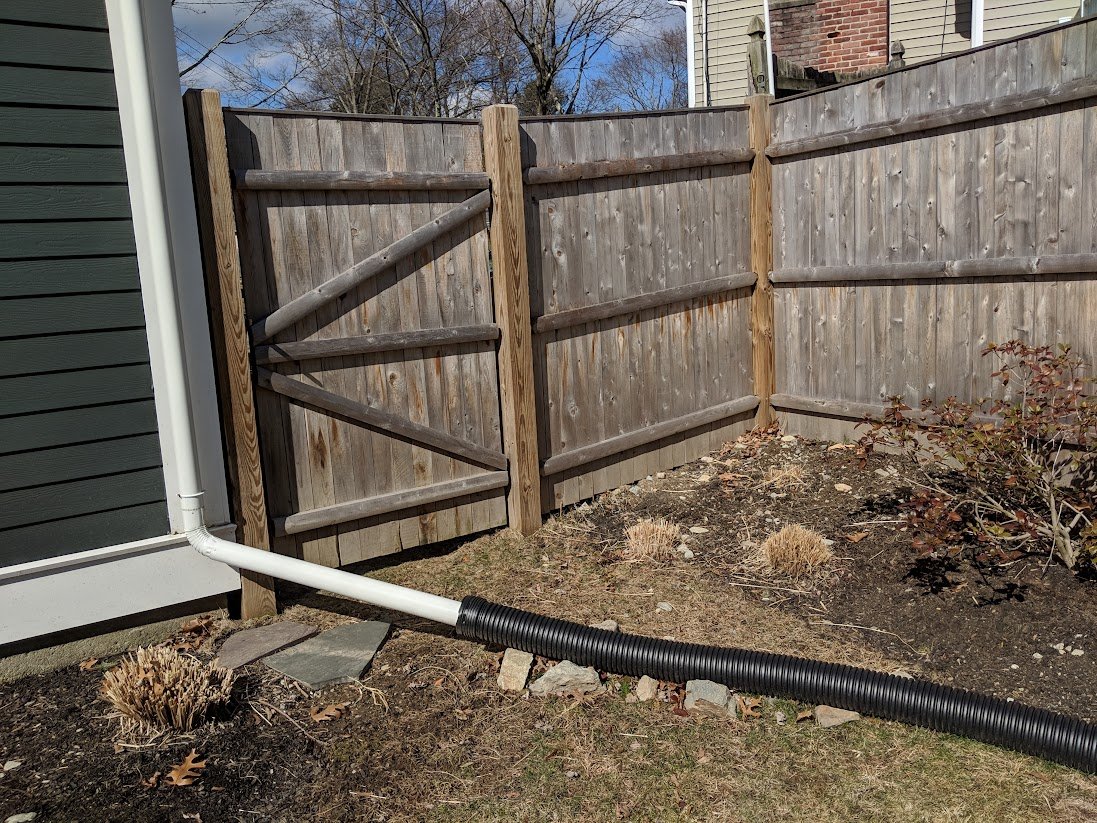
Typical DIY attempts to reroute water from downspouts can be both ineffective and unsightly.
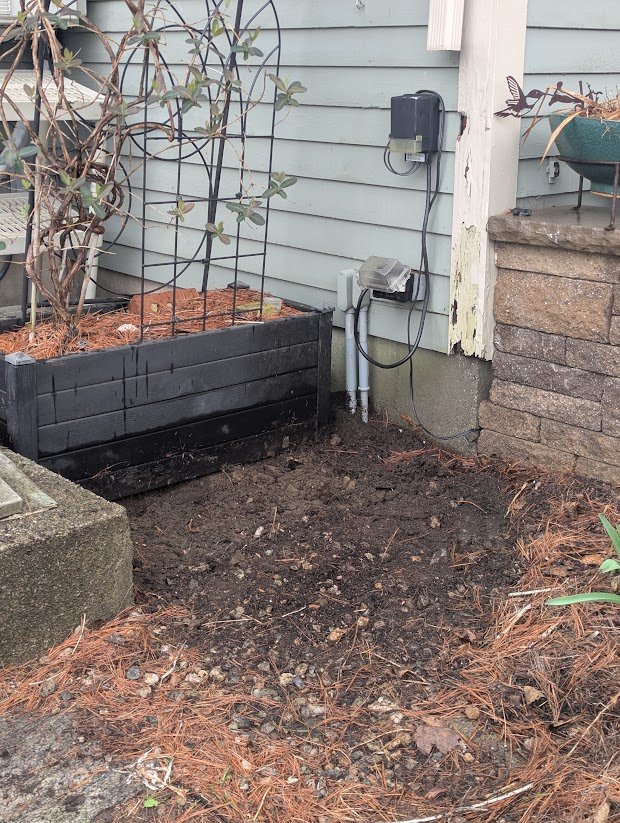
Many homeowners struggle with the damaging effects of stormwater runoff in their landscape. In some cases, a home’s downspouts empty directly into a garden bed or lawn. We’ve also seen downspouts that empty into water collection urns for later use in nearby gardens.
Each of these practices results in problems for the homeowner ~ at minimum, causing significant soil erosion and damage to the garden plantings. Even worse, they threaten the integrity of the home’s wood siding and stone foundation.
During our initial site consultation with new clients, we specifically look to identify any drainage or water management issues on the property. These must be addressed before we can proceed with the hardscape and landscape design process.
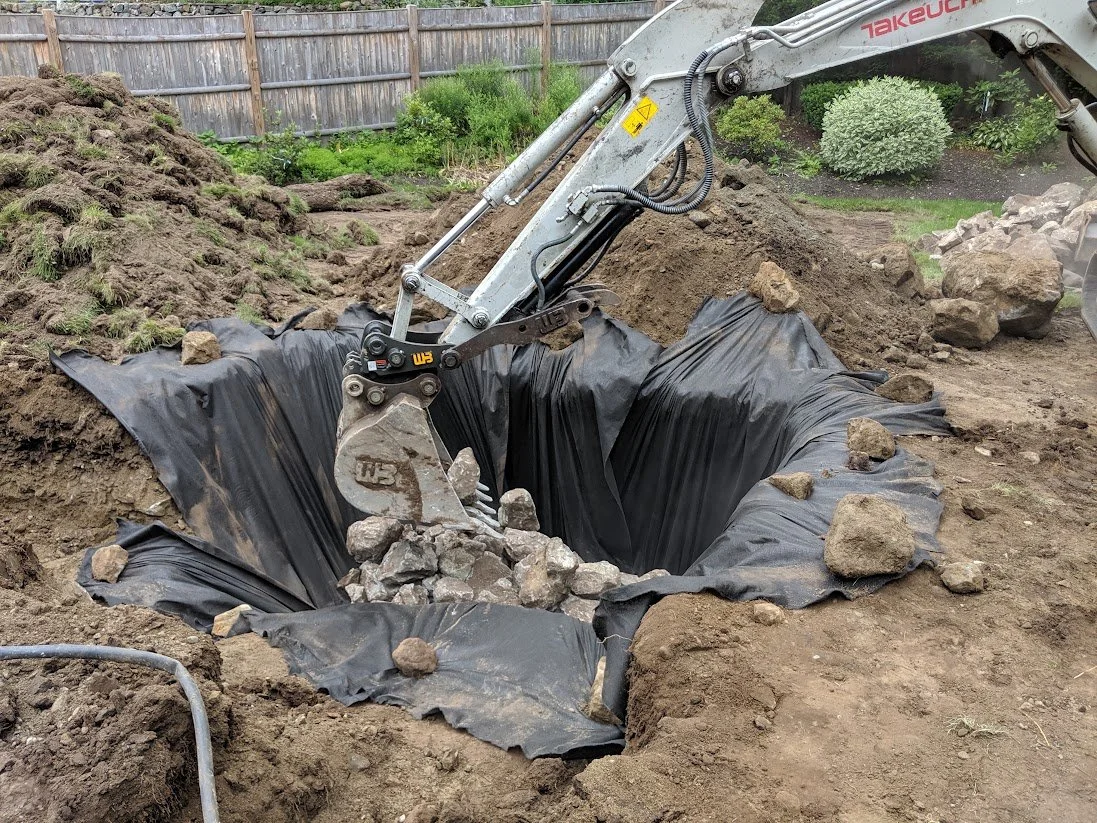
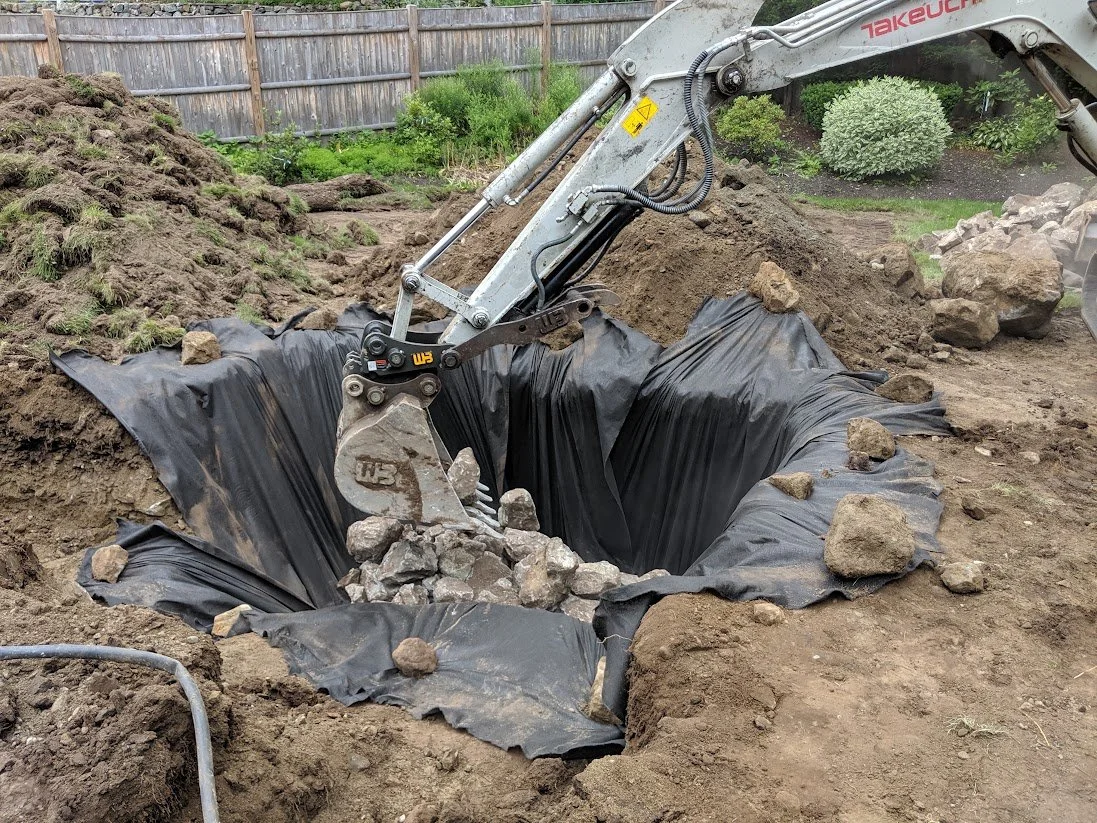
Drywell construction
Dry Well Solutions
To solve stormwater issues, we frequently recommend the installation of drywells which divert water safely underground. This option is highly effective and eliminates the concern for heavy rain amounts for many years.
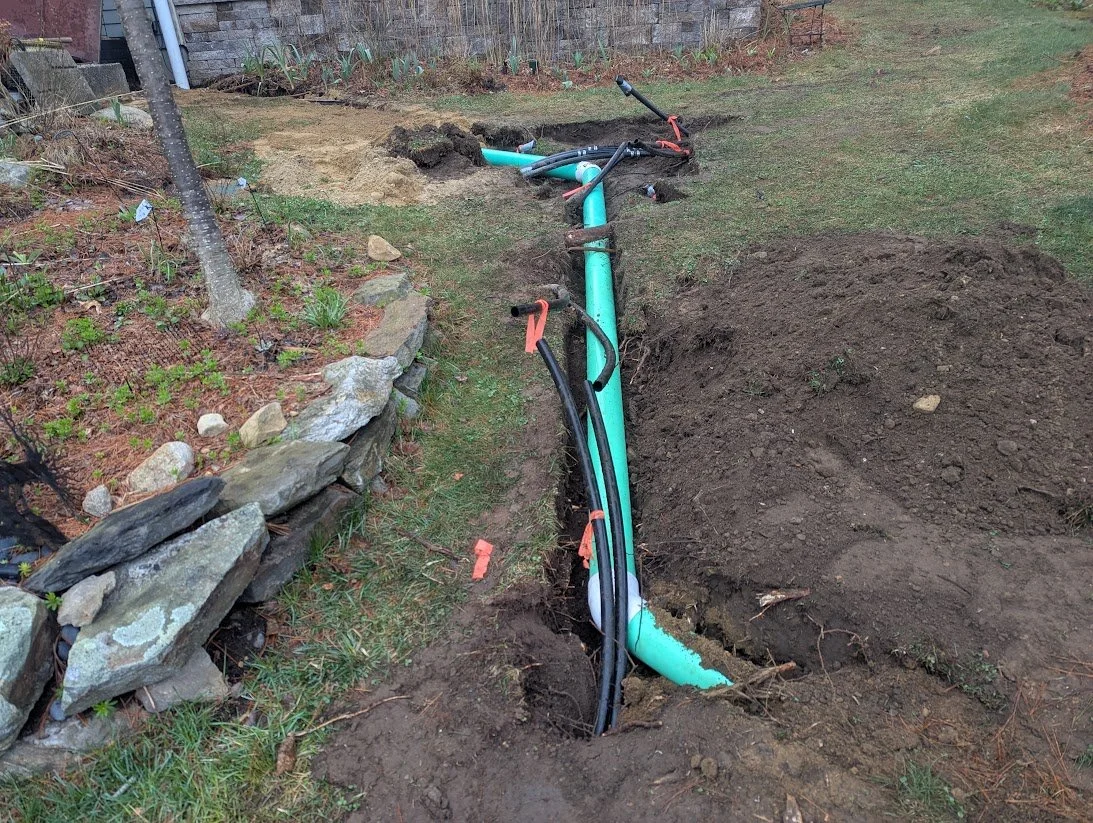
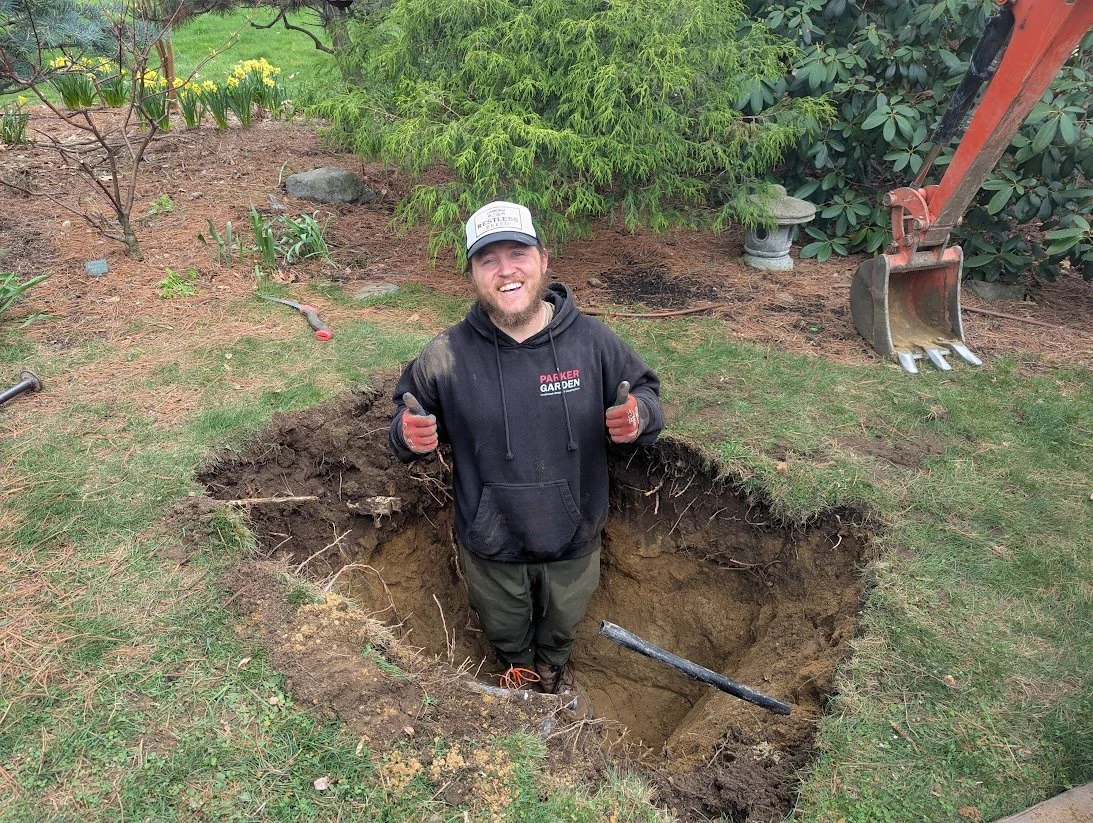
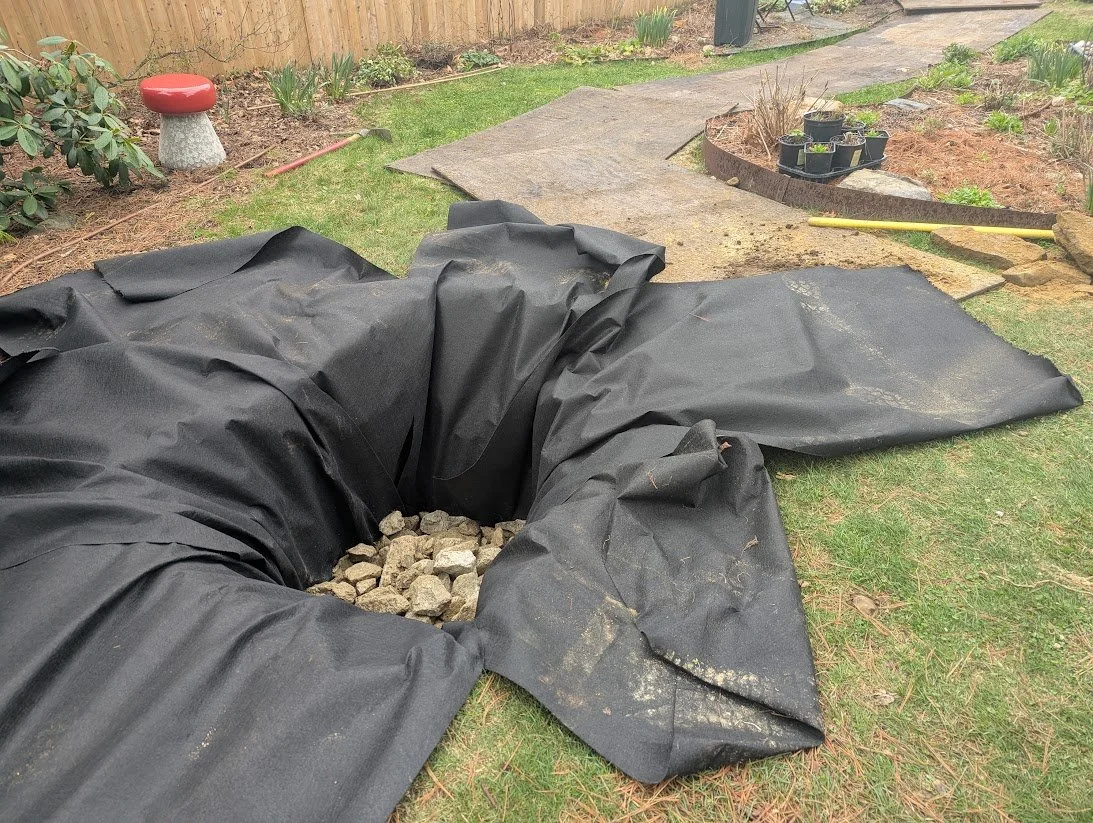
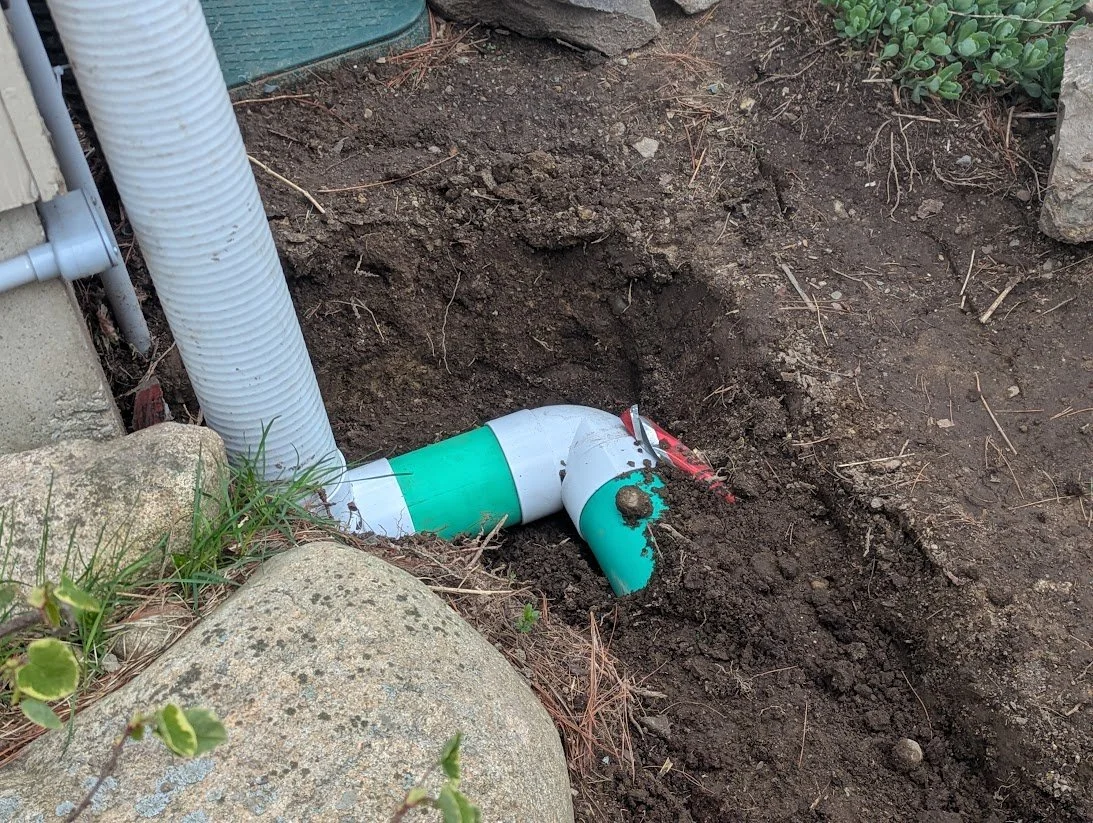
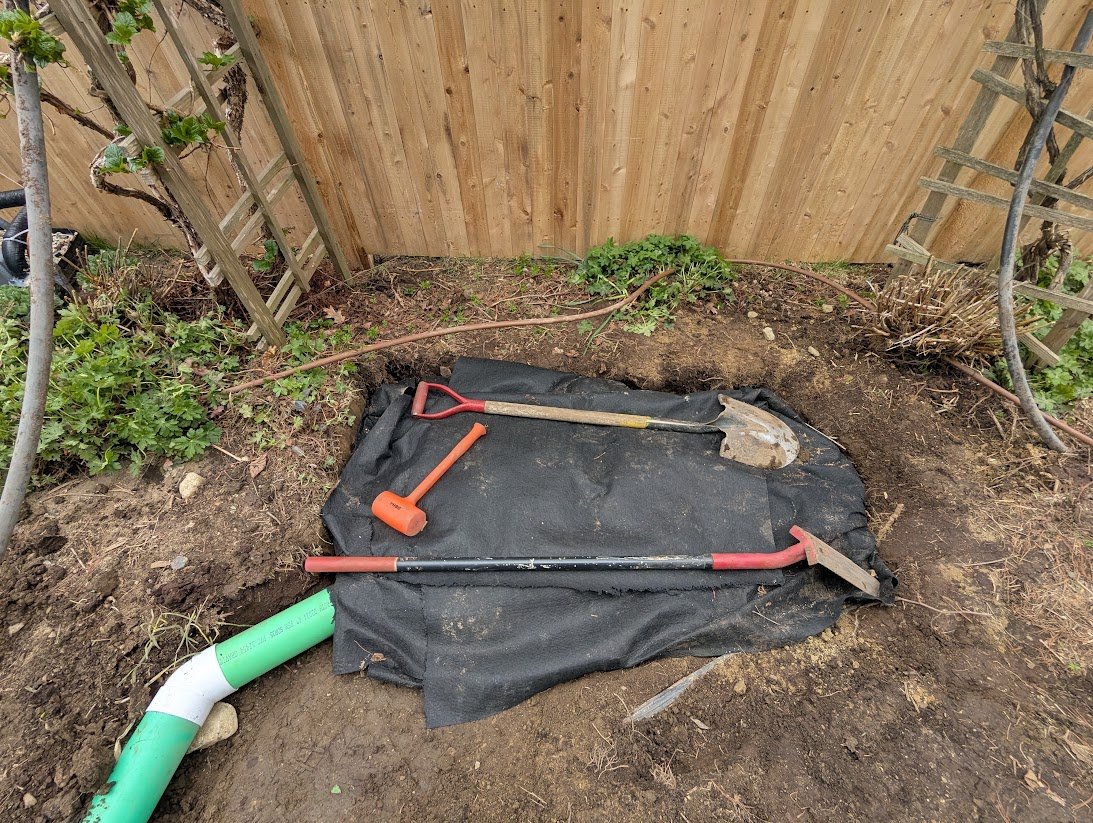
To create a drywell, we excavate deep trenches in the soil away from the home’s foundation. Wells are lined with a sturdy, porous fabric and filled with different sized rocks and gravel. Downspouts are connected to PVC conduit which is routed underground, emptying water into the rock pit. The drywell fabric is folded over, followed by soil and either sod or grass seed.
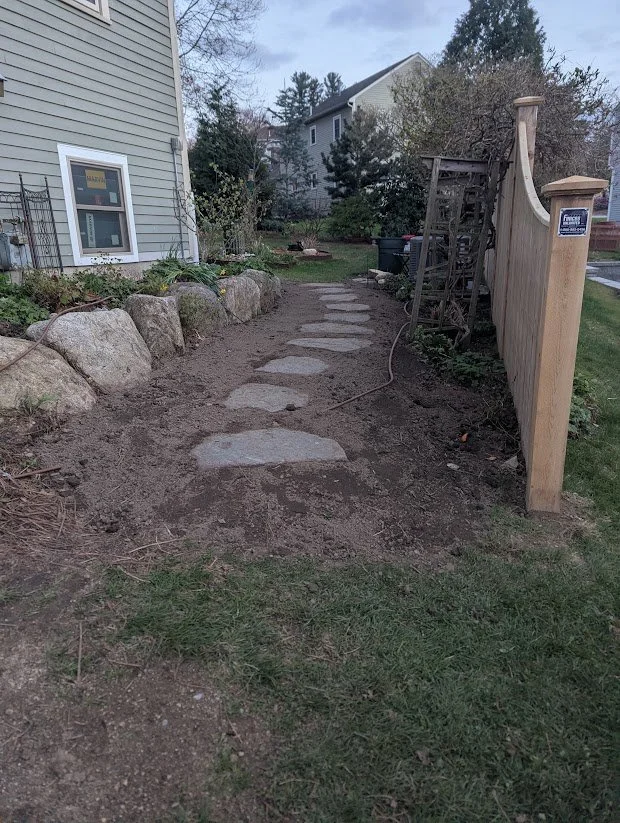
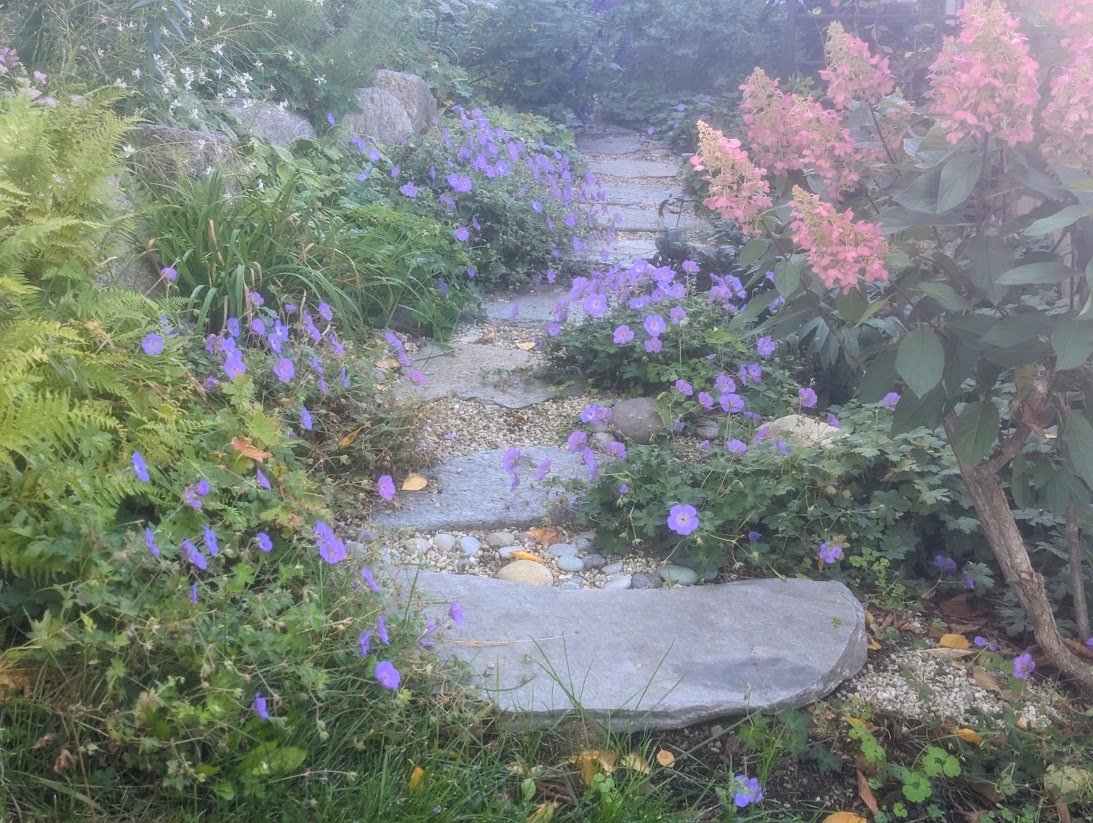
The result is a permanent solution that can eliminate issues with water pooling around the home’s foundation or puddling in garden beds and lawns. In fact gardens and lawns remain unharmed and can be planted in close proximity to the drywell. Our signature Goshen stone paths can even be installed on top of the well as these images from a recent project illustrate.
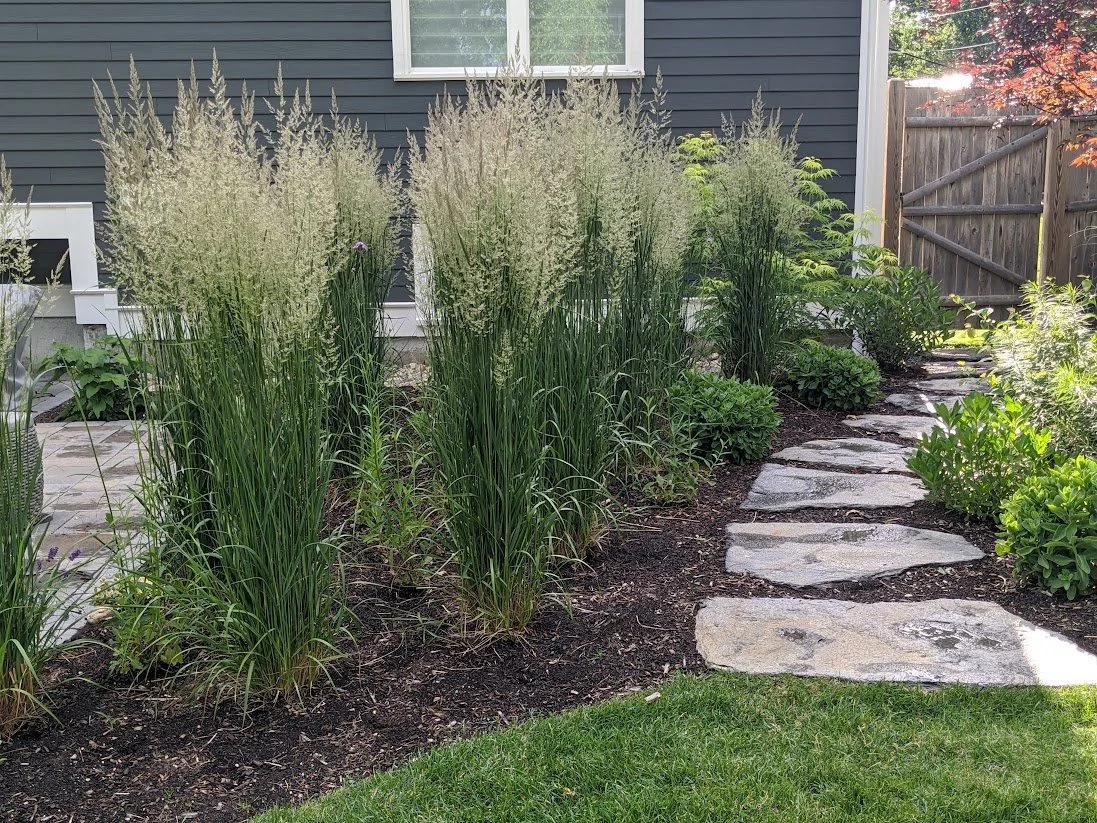
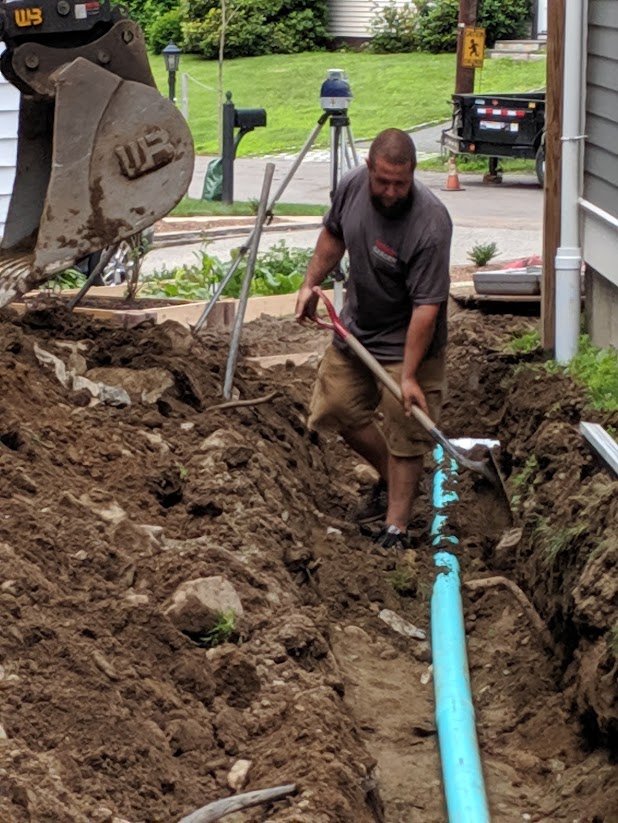
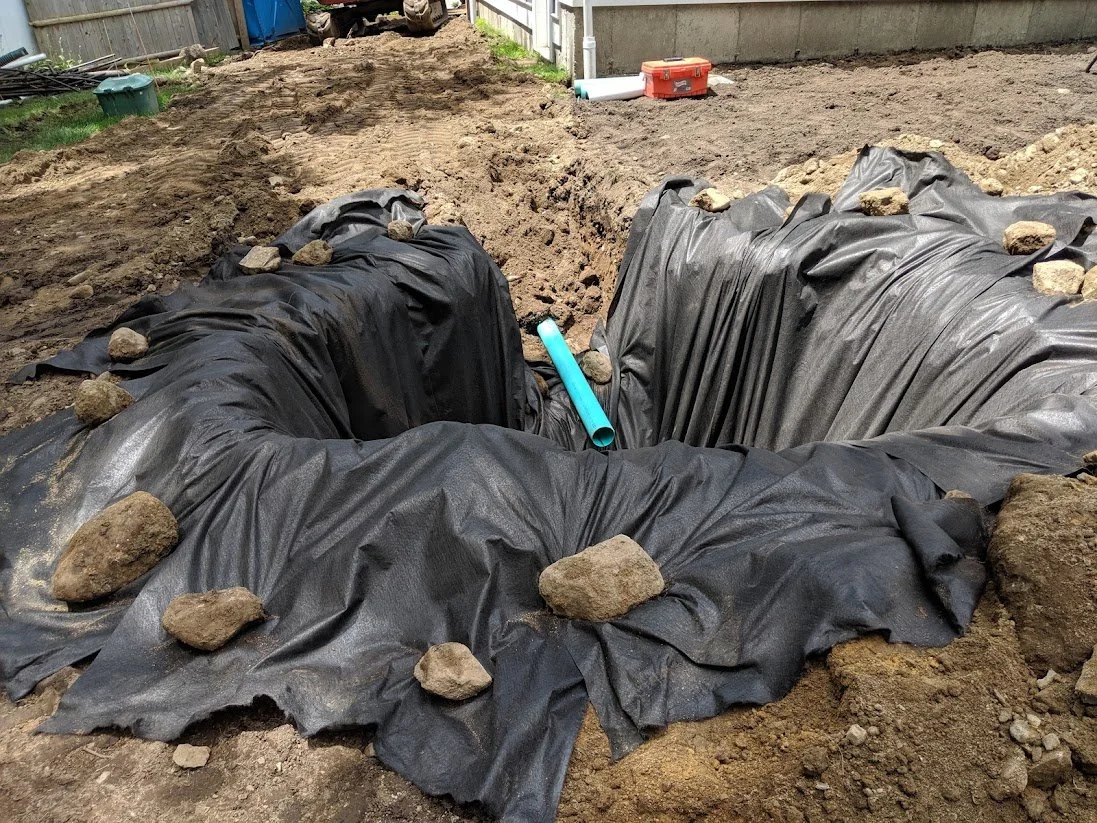
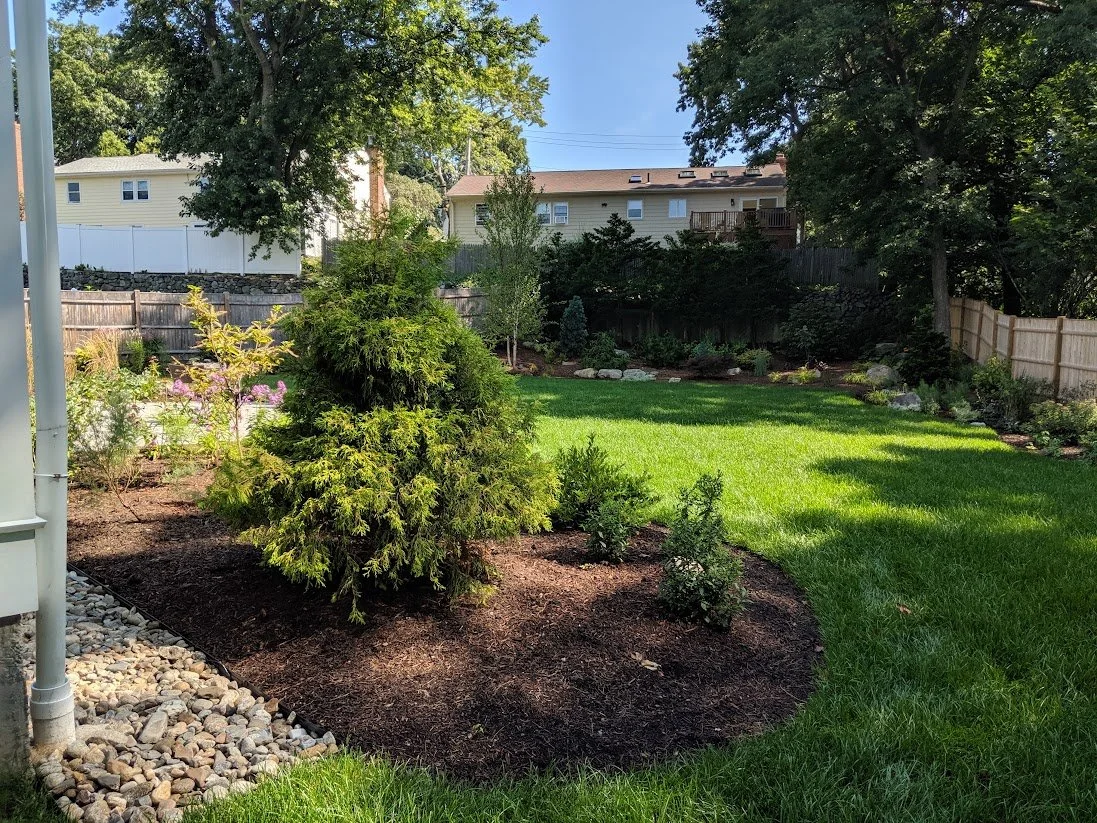
Another recent project from April, 2026 presented a need for two drywells, but the actual property size was only 1/4 acre with very tight access and extensive garden beds and large trees throughout. This project required specialized equipment and knowledge to properly excavate and create the drywells to prevent damage to the surrounding gardens, trees, stone walls and irrigation systems. The Goshen stone walkway and surrounding plantings that we had installed ten years earlier had to be removed then rebuilt after one of the wells was in place. Since installation, this Nashua property has experienced a few significant rainfalls with no subsequent drainage issues.
benefits of drywells
While drywells are mostly invisible to the homeowner, once installed their benefits are many:
eliminate the threat of water infiltrating foundations and rotting wood siding
eliminate the damage from downspouts to gardens and lawns
prevent water from running off into city sewage systems
help minimize potential flooding
help restore underground aquifers, capturing rainwater for later use